
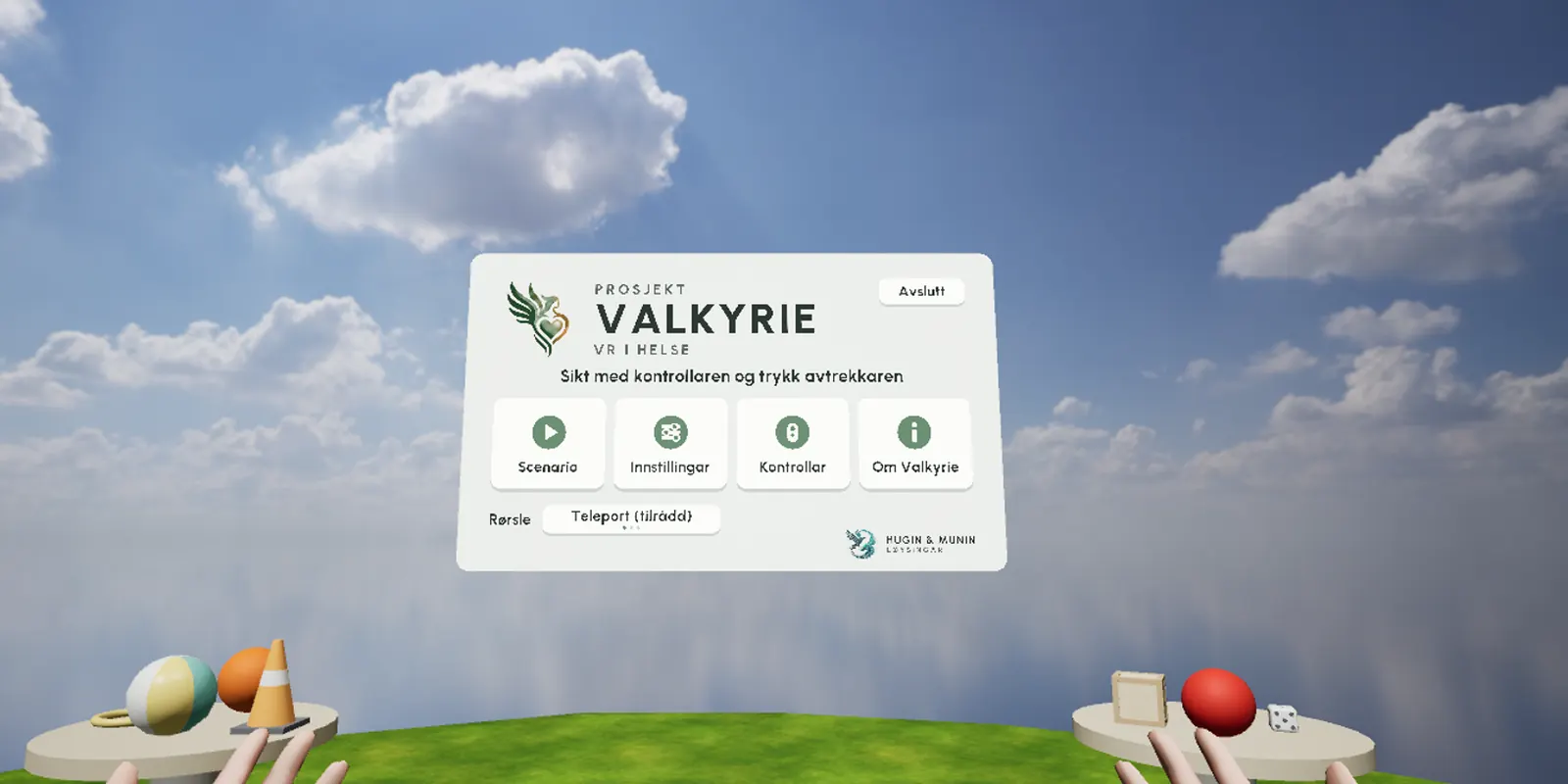
How it works
Together in one room
The teacher and up to five students share the same simulation and go through the scenario together.
The patient changes
The patient gets worse on their own if nobody steps in. The monitor alarms, and the patient breathes, changes colour and closes their eyes.
Reflection afterwards
Afterwards comes the debrief, with the timeline on the board: what happened, and when?
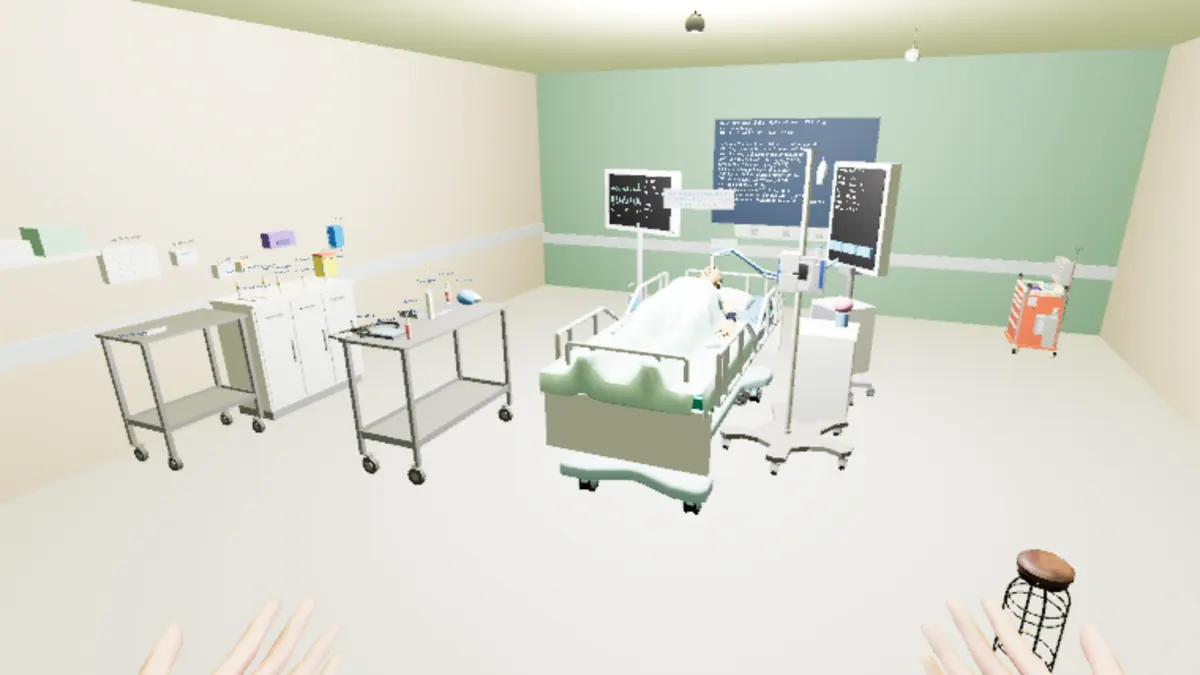
The room 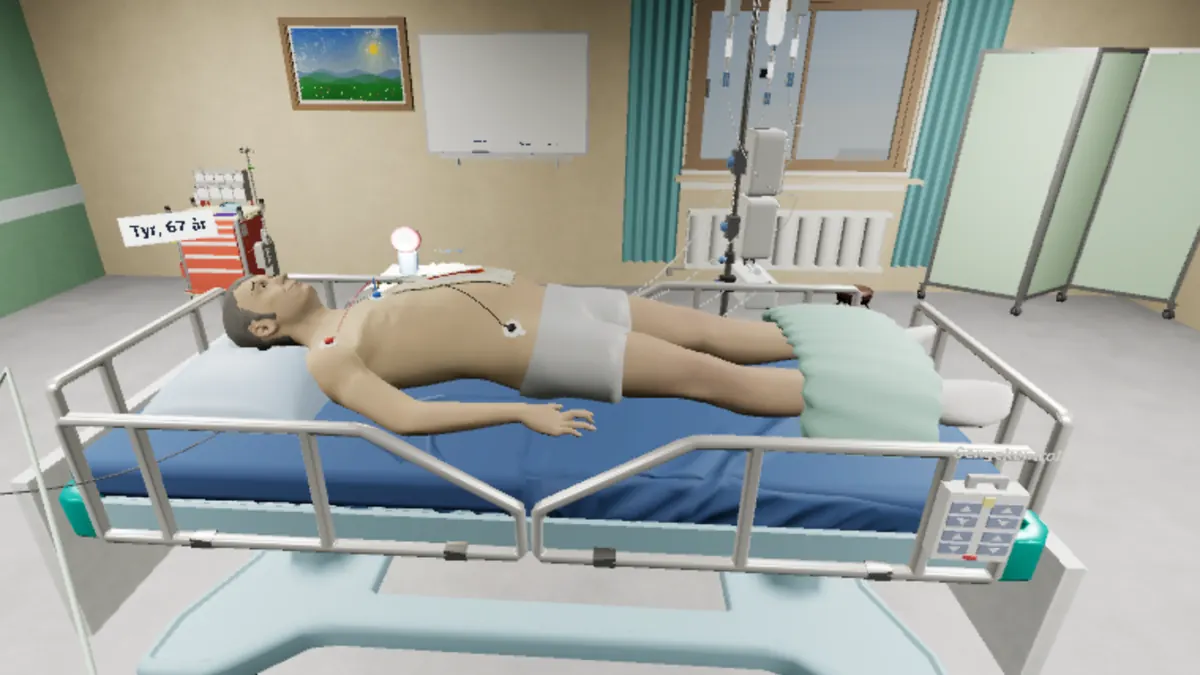
The patient 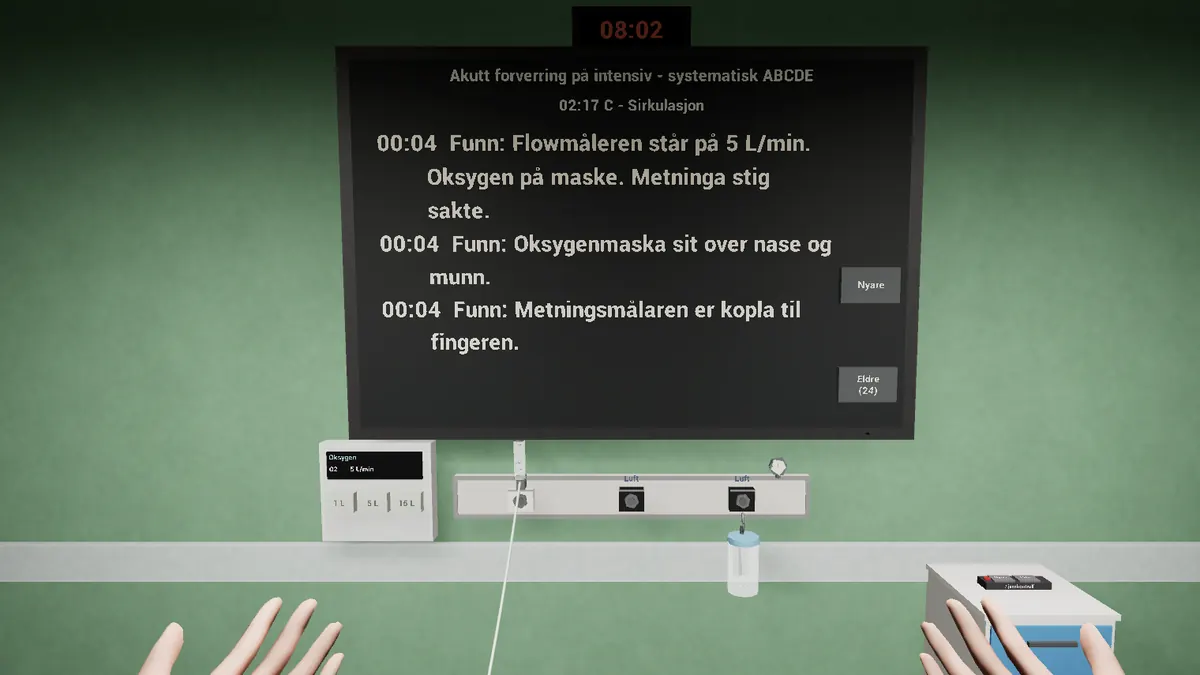
The timeline for the debrief
Scenarios
These are the scenarios in Valkyrie today. They are drafts until health professionals have approved them.
- Acute deterioration in intensive care – systematic ABCDE
- Hand hygiene and gloves – before, during and after
- Hypoglycaemia in older people with diabetes
- COPD exacerbation on the ward: oxygen to target
- Ventilated patient desaturates: DOPE
- Post-operative wound care – aseptic technique
Why VR
Much of what health workers need to master is hard to practise: rare situations, high pace, and patients you cannot afford to make mistakes on. In VR you can do the same thing many times, try and fail, and get feedback straight away.
- Safe to make mistakes – no patients at risk
- The same situation can be practised as often as needed
- Several people practise together, and learn from the debrief afterwards
The name
In Norse mythology, Eir is the foremost healer among the gods. Some sources also count her among the valkyries. Valkyrie stands for protection and care – being there when it matters.
 Made byHugin & Munin Solutions
Valkyrie is in development. Are you a teacher, programme leader or health professional who would like to help shape it? We would love to hear from you.